EnviroMed Services, LLC

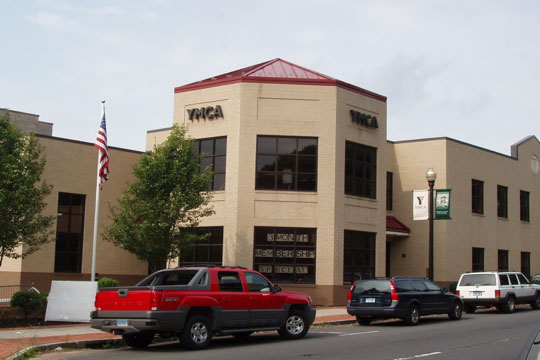
As part of a major demolition project for the Meriden Redevelopment Agency (MRA) of the old YMCA on West Main Street, EnviroMed completed the sampling for asbestos and lead in the building materials.  EnviroMed also conducted review of existing environmental documents to determine impacts to the subsurface environment.

A hazardous materials assessment was also completed to document and quantify hazardous and regulated materials prior to demolition of the building.  Asbestos and lead inspections were completed to document locations and quantify materials.  EnviroMed incorporated all the asbestos, lead, hazardous materials inspections in single inspection report.  The next phase of operation for EnviroMed was to complete an updated Phase I ESA to include all historical environmental data, and size up the scene for possible Phase II ESA work.  The history of the site noted some concerns with on-site USTs and possible contamination from off-site sources.

During the Phase II ESA EnviroMed was able to determine that there were two possible release areas.  One area was related to oil from unknown source and the second was gasoline contaminated soil from a former service station upgradient of the site.

EnviroMed then completed a Phase III ESA and geotechnical investigation.  The Phase III ESA was completed in the two AOECs by completing several soil borings and monitoring wells.  EnviroMed calculated the impact to soil and ground water at the site.  Remediation strategies were addressed in the Phase III ESA (a RAP included in the Phase III ESA Recommendations) along with cost estimates for remediation.

EnviroMed conducted a geo-technical ground penetrating radar (GPR) study for an upgradient former service station to determine if USTs were present.  In addition a Phase II and Phase III ESA were completed for the upgradient parcel to determine the affect of impact on the site.  Specifications for all phases of the abatement work and remediation were completed by EnviroMed, and monitoring was conducted by EnviroMed in conjunction with other consultants.  The new YMCA Building occupies its former location, but now is a state of the art facility

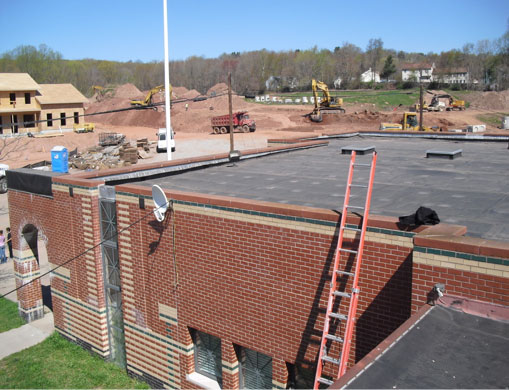
EnviroMed Services was retained by the New Haven Housing Authority to prepare environmental assessment for the West Rock Community Center. The environmental work began with a Phase I ESA for the site.  Due to old underground storage tanks (USTs) at the site and hazardous building materials, a Phase II ESA (soil sampling) and building investigations was performed for the West Community Center.  The soil sampling revealed areas of contaminated soil around a former/existing two 10,000-gallon fuel UST.  The building contained hazardous materials including asbestos, lead and PCBs, and recommendations were made by EnviroMed to New Haven Housing Authority’s Project Manager to remediate and dispose of these materials.

EnviroMed assisted the New Haven Housing Authority in providing cost estimates, design specifications and bidding documents for both soil remediation and building hazardous materials abatement. EnviroMed Services’ Licensed Environmental Professional (LEP) has worked to develop several solutions to deal with contaminated soil. The filing of a Land Use Restriction for the property will result in a saving of one million dollars in the cost of remediation of the property. A cost estimate and time frame for each approach was discussed with New Haven Housing Authority’s Project Manager. All phases of the assessment, sampling, and specifications/drawings were reviewed by New Haven Housing Authority’s Project Manager and the assigned architect for this project. Specifications were approved and the abatement phase of work will be supervised and monitored by EnviroMed. The construction is anticipated to start in May 2014.

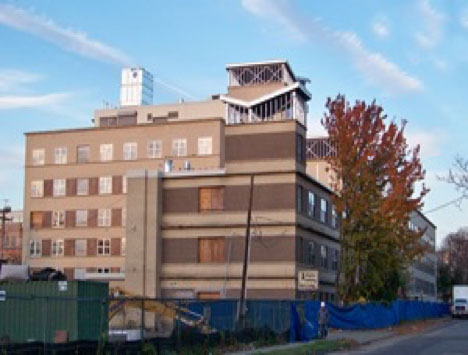
EnviroMed performed an ASTM-Standard Phase I Site Assessment of the property, which showed that the site had an industrial history stretching back over 100 years.  Because of this long industrial history, and the presence of existing underground storage tanks for fuel oil, EnviroMed recommended a Phase II subsurface investigation of the site.

Test pits were completed to assess the impacts to the soil.  Soil samples were collected and analyzed for the contaminants of interest.  The Phase II data gave additional information that was used to perform a Phase III ESA and produce a Remedial Action Plan (RAP).  During the Phase III, test borings were installed by a Geoprobe, direct-push drilling rig, and soil samples were collected and analyzed for the contaminants of interest.  The site buildings were demolished and associated materials were removed from the site and properly disposed of.

Industrial Hygiene services were provided to monitor dust emissions during the deconstruction of the site structures.  A Phase III subsurface investigation was subsequently performed to determine the extent and degree of soil contamination.  A Remedial Action Plan was prepared, which presented several options for soil remediation.

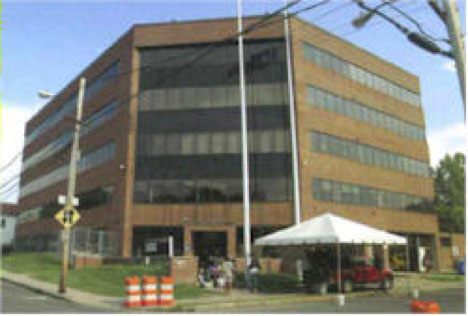
EnviroMed performed an ASTM-Standard Phase I Site Assessment of the property at 32 Acers located on Grand Street in Hartford.  EnviroMed researched and evaluated past users, owners, and activities that have been conducted on or adjacent to the property that may have impacted site environmental conditions.

EnviroMed gathered the historical information from records and sources that are readily available and appropriate for the type of property.  Information sources included interviews with persons knowledgeable about past or current operations, property title records and available city directories.

EnviroMed conducted a reconnaissance of readily accessible areas of the property to evaluate environmental conditions and potential environmental impact source areas, pathways, and receptors.

EnviroMed reviewed accessible files of the Connecticut Department of Environmental Protection.  The Connecticut State Library also conducted interviews with appropriate agency personnel.

The final Phase 1 Environmental Site Assessment reports were completed and were reviewed by EnviroMed Licensed Environmental Professional (LEP). Final reports include site description, user provided information, historical site summary, Regulatory Agency Records review, site reconnaissance, transfer act status and conclusion.

EnviroMed was the environmental consultant that performed waste characterization sampling for product within three discovered underground storage tanks (USTs).

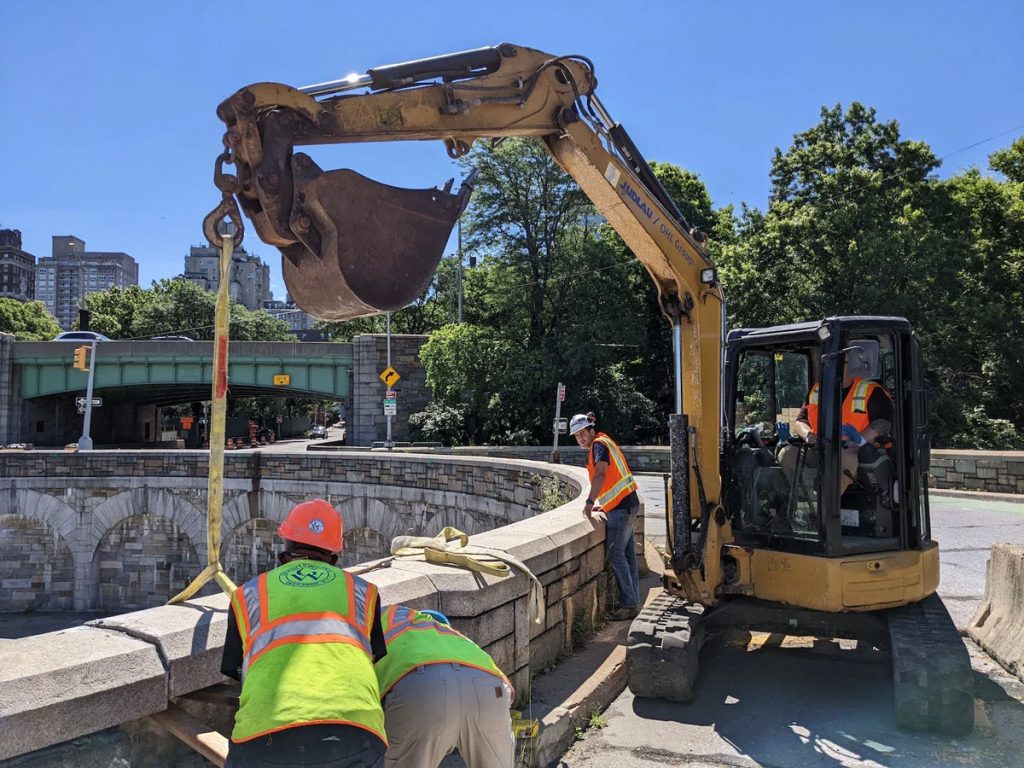
The USTs were discovered during roadway work at the bridge site.  EnviroMed obtained and sent samples of the product in the tanks to certified laboratory for a full RCRA waste characterization.  Once the determination was made that the tanks contained gasoline that was considered to be hazardous waste, EnviroMed oversaw the proper pumping, cleaning, and removal of the tanks.  EnviroMed wrote the specification of the UST removal based on federal and state regulations.  Once the tanks were properly closed, EnviroMed sampled the UST gravesites.  EnviroMed is familiar with the New York State DEC Regulations for gasoline USTs at closure.  EnviroMed used these regulations for sampling protocols for the excavation grave samples.

Contamination of gasoline volatiles was found during the first round of soil testing.  Remediation of soil was monitored by EnviroMed until closure samples met the criteria established by the DEC regulations.  Waste characterization sampling and analysis were completed by EnviroMed prior to contaminated soil being transported to the designated facility.

Also, EnviroMed completed an investigation and sampling for three transformers related to the bridge structure.  Three transformers within the south abutment of the Service House were opened and sampled for PCBs and for used oil parameters.  Prior to sampling a map was developed to document the locations and conditions of the transformers.  Each transformer was marked with a letter designation; samples were then collected in accordance with EPA’s Toxic Substance Control Act (TSCA) Regulations for PCBs.  EnviroMed made relevant observations for any staining or impact to other surfaces (i.e., concrete, soil, metal).  Samples were stored and sent to a certified laboratory for PCBs and used oil parameters.  EnviroMed summarized the inspection and analytical results into a report that specified the type of waste in the transformers and their status under the EPA TSCA Regulations.

EnviroMed monitored conditions at a bridge site where several unidentified drums were observed.  EnviroMed was called in to monitor air quality around the drums, observe environmental conditions around the drum, and sample the contents of the drums for waste characterization purposes.  EnviroMed first suited up in the appropriate level of personal protective equipment, and then monitored the air for volatile organics, semi-volatile organics, oxygen content, carbon monoxide, hydrogen sulfide, and lower explosive limit, which are parameters typically analyzed by real time data instruments.  After proceeding with caution, and after monitoring results were below permissible exposure limits, EnviroMed opened the drums using non-sparking tools.  Individual samples were collected using the appropriate sampling jars, and then the jars were labeled with the specific information for each drum.  Samples were then transported to a New York State certified laboratory.

In addition to meeting all the requirements and certifications of the request for proposal, EnviroMed staff’s extensive training in general safety and health procedures include work site safety, respiratory protection, right-to-know, electrical safety, as well as appropriate risk communication in dealing with the public (i.e. community groups), NYCDOT staff, environmental health, safety personnel, resident engineers and administrative staff.  Separately, EnviroMed is fully knowledgeable concerning the requirements of the FEIS and the chain-of-command structure within the NYCDOT in the implementation of the independent monitoring procedures.

The quarterly sampling is to keep in compliance with the discharges for several bridge and tunnel sites operated by NYCDOT.  The sampling is quarterly for each location, with the proper collection of water samples from sump areas prior to discharge for Oil and Grease, Total Suspended Solids, pH, temperature and discharge volume calculations.  

EnviroMed uses proper sampling procedures following EPA, ASTM, and State of New York, and New York City DEP requirements.  The sampling is performed throughout Queens, Bronx, Brooklyn, and Manhattan boroughs.  The samples are delivered same day as collection to a state of New York certified laboratory.  Each sampling site has a report prepared by EnviroMed and submitted to NYCDOT for the SPDES permit program.

State Pollution Discharge Elimination Sources (SPDES) Permit sampling was completed by EnviroMed for accumulated water within sump pit locations for the following bridges and tunnels:

As part of a major demolition project for the Meriden Redevelopment Agency (MRA) of the old YMCA on West Main Street, EnviroMed completed the sampling for asbestos and lead in the building materials.  EnviroMed also conducted review of existing environmental documents to determine impacts to the subsurface environment.  A hazardous materials assessment was also completed to document and quantify hazardous and regulated materials prior to demolition of the building.  Asbestos and lead inspections were completed to document locations and quantify materials.

EnviroMed incorporated all the asbestos, lead, hazardous materials inspections in single inspection report.  The next phase of operation for EnviroMed was to complete an updated Phase I ESA to include all historical environmental data, and size up the scene for possible Phase II ESA work.  The history of the site noted some concerns with on-site USTs and possible contamination from off-site sources.  During the Phase II ESA EnviroMed was able to determine that there were two possible release areas.  One area was related to oil from unknown source and the second was gasoline contaminated soil from a former service station upgradient of the site.  EnviroMed then completed a Phase III ESA and geotechnical investigation.  The Phase III ESA was completed in the two AOECs by completing several soil borings and monitoring wells.  EnviroMed calculated the impact to soil and ground water at the site.  Remediation strategies were addressed in the Phase III ESA (a RAP included in the Phase III ESA Recommendations) along with cost estimates for remediation.  EnviroMed conducted a geo-technical ground penetrating radar (GPR) study for an upgradient former service station to determine if USTs were present.  In addition a Phase II and Phase III ESA were completed for the upgradient parcel to determine the affect of impact on the site.  Specifications for all phases of the abatement work and remediation were completed by EnviroMed, and monitoring was conducted by EnviroMed in conjunction with other consultants.  The new YMCA Building occupies its former location, but now is a state of the art facility.

Housing Site Bridgeport, CT

EnviroMed conducted a review of a previous Phase I ESA conducted by others of a former Public Housing facility in Bridgeport, CT.  The goal of the assessments was to develop the site into a single-family residential complex.  A Phase II ESA was completed by EnviroMed sampling soil in AOEC to determine the release areas.

Several release areas were detected and were for PAHs and lead in coal ash material.  EnviroMed recommended to the client to conduct a Phase III ESA.  The client authorized the Phase III assessment, and EnviroMed mobilized to the site for addition assessment of the impacted soil areas.  The areas were delineated and estimates were given for each AOEC.  A total quantity of PAH and lead contaminated soil above the applicable RSR criteria were given as part of the Phase III ESA.

Review of all of the assessment data during the CSM document revealed that additional metals data was necessary to ascertain non-hazardous levels of lead in soil.  This project identified approximately 2,00 cubic yards of PAH impacted soil over applicable RSR criteria and approximately 500 cubic yards of non-hazardous lead impacted soil.

Remedial alternatives were discussed in detail for the site RAP.  The best alternative was presented to the client considered human health and environmental factors.  The remedial alternative chosen for this site was excavation of contaminated soil backfill with clean fill.  The variance was used for “widespread polluted fill” as defined in the RSRs for this site.  The impacted soil at the site met the criteria for “widespread polluted fill”.  EnviroMed used the four-foot of removal of contaminated soil and placement of four feet of clean fill where the proposed grade is going to be grass or soil.  This conforms to the RSRs as long as an Environmental Land Use Restriction (ELUR) is placed on the property.  The client is currently trying to fund the project based on the estimated remediation costs associated with the site.

Several other sites have been assessed for Phase I, II, and III for the City of Bridgeport, and are included below:

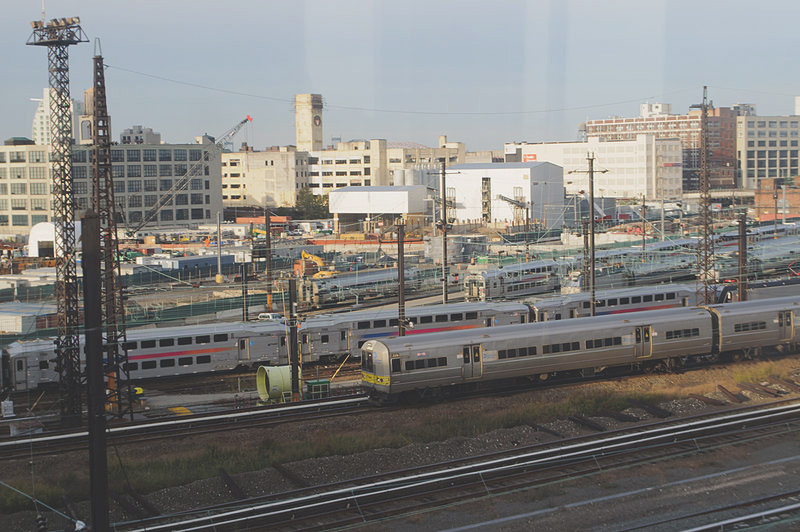
In preparation for a full investigation concerning the origin of contaminants in the Sunnyside Rail Yard, Queens, NY, EnviroMed prepared a Health and Safety Plan for soil sampling and a Quality Assurance Project Plan to manage the investigation.  All workers received AMTRAK training in rail yard safety; the HASP provided for the electrical and other physical hazards of the rail yard as well as chemical hazards.

As part of the QAPP, a soil-sampling plan was designed.  The soil-sampling plan specified sampling locations based on random numbers and was therefore statistically unbiased.  Statistical bias is a common fault of many investigations and can destroy the validity of the investigation’s conclusions.  Avoidance of statistical bias requires careful planning.

The QAPP also specified the statistical tests to be performed on the data in order to reach a conclusion regarding the origin of the contaminant (lead).  These tests included identification and confirmation of statistical outliers, tests for normality and log normality, analysis of censored data, and comparison of means and correlation analysis.  Seventeen individual statistical tests were selected to be applied to the data as part of the analysis.  Data validation included provision for contaminants typically introduced in analytical laboratories.  Data were checked for chains-of-custody, sample labeling, laboratory holding times, surrogate recoveries, analytical data for blanks and spikes, and instrument performance data.

EnviroMed also performed investigation, evaluation and remediation oversight of environmental contamination located within the Sunnyside Rail Yard under the Honeywell Avenue Bridge, which was slated for demolition and rehabilitation in 2001/2002.  EnviroMed was able to evaluate prior Phase I and II environmental assessments from other environmental consulting groups and ascertain if adequate data was collected for remedial action. Additional environmental sampling and monitoring was undertaken by EnviroMed to further isolate and demarcate contamination not previously notated.  Data was transmitted in a detail mapping to all concerned parties for corrective action.  Finally, EnviroMed was tasked by NYCDOT to oversee the remedial actions performed by the contractor to ensure the clean-up operations were being performed in accordance with federal, state and local environmental standards.  Data was also collected and issued to NYCDOT regarding ambient monitoring to ensure Amtrak that the contamination was not expanding beyond the project site.

Additionally, Sanborn Insurance Maps and historical aerial photographs of the Site were reviewed in detail.  Numerical models were performed to simulate the down-wind migration of lead-containing paint chips generated by sandblasting bridges.

A Phase 1 ESA is a report that summarizes a site visit and records review of a property and its surrounding area to determine if any additional environmental investigation is warranted to understand the liability risks associated with the identified property.  The purpose of a Phase 1 Environmental Site Assessment is to use a consistent systematic approach to identify any existing or potential environmental conditions that may be present or affect a real estate property.

There are two other aspects to a Phase 1 that may come into play depending on what is found during the Phase 1 inspection and research. These are Phase 2 and Phase 3. As you might assume Phase 2 and Phase 3 are the more involved aspects of the environmental field. Phase 2 involves testing of the site such as coring into the earth and taking samples of the soil along with testing it to determine what is in the soil. The information during a Phase 2 will determine if the site warrants further investigation and/or to be remediated. If remediation is needed this is Phase 3.

Remediation deals with the removal of pollution or contaminant from environmental media such as soil, ground water sediment or service water. EnviroMed for the past 29 years has helped its clients to identify and manage their environmental liabilities at former commercial and industrial properties.

The TRC operations based out of Midland has been performing Emergency Spill Response for 14 years. The responses have ranged from small and large pipeline releases, to highway rollover accidents. We work with the clients, as well as the government agencies to minimize the damage to the environment in a safe and effective manner. We are capable of responding to all spills with the proper management and oversight personnel, an army of individuals needed to contain and control the location, the proper heavy equipment needed to contain and remediate the location, as well as the safety personnel and equipment needed to do it safely. We are planning on extending this service to the Oklahoma City area in this fiscal year to afford our clients their the same service we provide to the Permian Basin.

Our civil and structural engineering staff, soil evaluators, and surveyors are highly experienced at evaluating site-specific drainage characteristics and designing storm water management systems that are compliant with state and federal requirements.

We have developed storm water plans and specifications for many categories of public infrastructure projects, including highways and bridges, for many private-sector clients, especially in the power generation and commercial real estate sectors.

Mold Inspection Services Call 203-238-4846 to Schedule
Back

Request Information

The Brookly Bridge

Inspection of the Arch area for potential asbestos containing materials, potential lead-based paint, and other hazardous materials was completed by EnviroMed. A sampling plan was proposed by EnviroMed to NYCDOT for the following concerns: sample ceiling plaster (two layers of plaster), sample pipe insulation, inspect and sample the office partitions and doors for asbestos, test the paint for lead, sample the dust via bulk samples and analyze for asbestos and lead, perform TCLP sampling and analysis for building debris prior to disposal, and characterize the liquid wastes in storage. Personal sampling during the work was recommended for lead in air, asbestos in air and total particulate.

Full details

Covidien Surgical Devices

EnviroMed has provided numerous Industrial Hygiene Services for Covidien Surgical Devices (formerly US Surgical) in order to aid them in ensuring a safe work place for their employees, as well as compliance with OSHA regulations. EnviroMed has provided employee exposure monitoring for ethylene oxide, xylene, formaldehyde, respirable particulates, tetrachloroethylene, asbestos, and other analytes.

Working with Covidien to review the chemicals and processes they utilize for manufacturing and sterilization, EnviroMed is able to provide monitoring services that ensure employee safety, and regulatory compliance, for a safe work environment at their facilities.

Full details

The Town of Wallingford

EnviroMed Services provides safety training based on OSHA regulations to the Wallingford Department of Public Works facilities and the Electric Division facilities. EnviroMed Services provides OSHA training programs for the Wallingford Electric Division for the past 10 years to meet their responsibility under OSHA regulations. EnviroMed Services personnel conducted an audit of town’s public utility maintenance and distribution system and work crew. EnviroMed Services personnel visited sites, which included observing daily activities that were conducted for the work crew, log our observations, have any dangerous work habits changed and abated. Once EnviroMed Services site visit and observation were completed our client asked us to write actual OSHA safety programs for the city to follow. The city at the time had no such programs and was in need of such programs. EnviroMed wrote the following OSHA Safety Programs that are being used by this client today:

Full details

Service

How do you collaboratively administrate empowered markets via plug-and-play networks? Efficiently unleash information. Quickly maximize timely deliverables. Dramatically maintain solutions. Completely synergize relationships. Professionally cultivate customer service. Where do you proactively envision multimedia based expertise and cross-media growth strategies? Seamlessly visualize quality intellectual capital. Collaboratively administrate turnkey channels. Objectively seize scalable metrics. Energistically scale future-proof core competencies. Project Details

Page link